

Hearing loss can affect different parts of the ear and may occur for a variety of reasons. One form that involves more than one part of the hearing system is mixed hearing loss. Understanding what it is, what causes it, and how it is treated can help people recognise symptoms early and seek the right support.
Mixed hearing loss occurs when both conductive hearing loss and sensorineural hearing loss are present at the same time. In other words, there is a problem affecting both the outer or middle ear and the inner ear or auditory nerve.
Normally, sound travels through the ear canal to the eardrum and middle ear bones before reaching the inner ear, where it is converted into signals sent to the brain. In mixed type hearing loss, this process is disrupted in two ways: sound may be partially blocked or reduced in the outer or middle ear, while the inner ear may also struggle to process sound effectively.
Because two different parts of the hearing system are involved, mixed hearing loss symptoms can vary depending on the severity of each component.
The symptoms of mixed hearing loss can vary from person to person depending on how much each part of the ear is affected.
Common mixed hearing loss symptoms may include:
People with mild mixed hearing loss may notice subtle hearing difficulties, while those with mild to moderate mixed hearing loss may struggle more with speech clarity in everyday situations.
The causes of mixed hearing loss usually involve a combination of conditions affecting different parts of the ear. Understanding what causes mixed hearing loss can help guide treatment and management.
Common mixed hearing loss causes include:
In many cases, the cause of mixed hearing loss involves a treatable conductive issue combined with a permanent sensorineural component.
 Visit your local clinic
Find your nearest clinic
Visit your local clinic
Find your nearest clinic
Diagnosing mixed hearing loss requires a professional hearing assessment carried out by an audiologist or hearing care specialist. During a mixed hearing loss diagnosis, several tests are performed to evaluate how sound travels through the different parts of the ear and to identify whether both conductive and sensorineural components are present.
One of the main tools used is a hearing test, which produces a chart known as an audiogram. This graph shows how well a person can hear sounds at different frequencies and volumes, helping specialists determine both the type and degree of hearing loss.
In many cases, a mixed hearing loss audiogram reveals a combination of two patterns: reduced hearing sensitivity and differences between air and bone conduction results. These findings indicate that sound transmission is affected in both the outer or middle ear and the inner ear.
To confirm the diagnosis, audiologists may also perform additional evaluations such as middle ear tests or tuning fork tests like the Rinne and Weber tests.
Understanding how to determine mixed hearing loss on an audiogram involves comparing the results of air conduction and bone conduction tests.
Air conduction measures how sound travels through the entire hearing system—from the outer ear to the inner ear—while bone conduction bypasses the outer and middle ear and directly stimulates the inner ear.
When both results are analysed together, mixed hearing loss is typically identified by:
This combination confirms that hearing loss is affecting multiple parts of the hearing system. Once identified, the hearing care professional can recommend the most appropriate management or treatment options.
The treatment of mixed hearing loss depends on the underlying causes and the severity of the condition. A hearing care professional may recommend different approaches.
Common mixed hearing loss treatment options include:
If a conductive problem is present, treatment may involve:
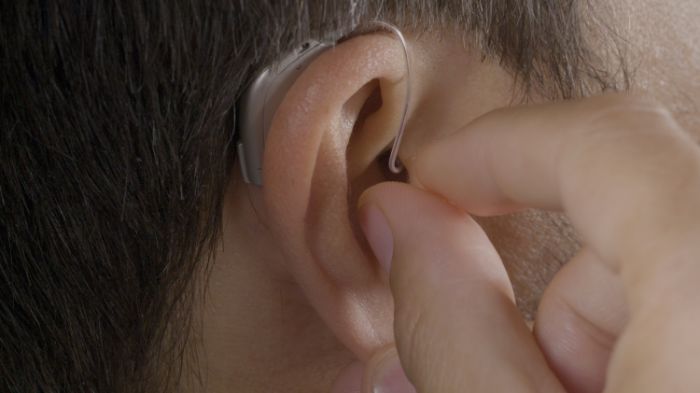
For many people, hearing aids for mixed hearing loss are an effective solution. These devices amplify sound to compensate for reduced hearing sensitivity and help improve speech understanding.
A hearing specialist can recommend the most suitable hearing aid for mixed hearing loss based on the results of a hearing test and the individual’s listening needs.
If you notice persistent hearing difficulties, muffled sounds, or trouble understanding conversations, it may be time to schedule a hearing test. Early evaluation can help identify the characteristics of mixed hearing loss and determine the most appropriate care plan.
Hearing specialists can provide personalised guidance, explain your hearing test results, and recommend solutions that support better hearing and communication
Hearing loss is a common condition, particularly as people age. While sensorineural hearing loss is the most frequent type, mixed hearing loss can occur when an existing inner ear condition is combined with a middle or outer ear problem.
For example, someone with age-related hearing loss may also develop ear infections or fluid in the middle ear, creating a mixed hearing loss situation.
Mixed hearing loss is not always entirely permanent. In some cases, the conductive component—which affects the outer or middle ear—may be temporary and treatable, for example if it is caused by earwax buildup, fluid in the middle ear, or an infection. When the underlying issue is treated, this part of the hearing loss may improve.
However, the sensorineural component, which involves the inner ear or auditory nerve, is typically permanent. Even so, it can often be effectively managed with hearing solutions such as hearing aids. Identifying each contributing factor through a professional hearing assessment is essential to determine the most appropriate treatment approach.
A common question people ask is: can mixed hearing loss be corrected?
The answer depends on the underlying causes. If the conductive component is caused by something treatable—such as earwax buildup or fluid in the middle ear—medical treatment may improve hearing.
However, the sensorineural component is usually permanent. In these cases, the hearing loss can still be treated with hearing solutions that help people hear more clearly and improve daily communication.