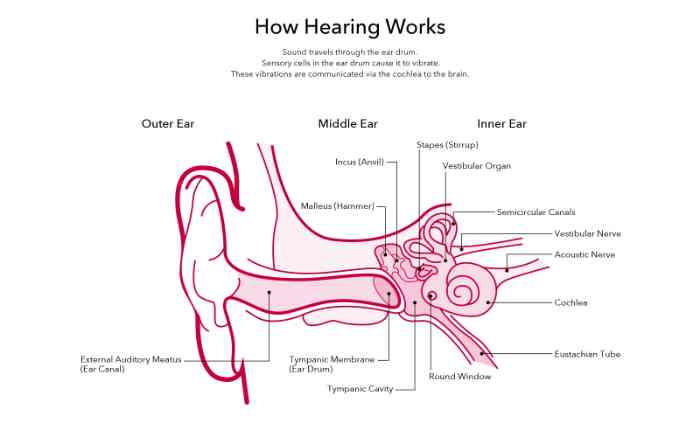


The outer ear comprises the auricle (pinna) and external auditory canal, key parts of the outer ear that capture sound. The auricle features the helix (rim), antihelix (inner ridge), tragus (canal guard), antitragus, concha (sound funnel), and lobule (soft earlobe). These components of the outer ear direct sound waves inward.
The canal, roughly 2.5 cm long, has a cartilaginous outer third (flexible, skin-lined with hair) and bony inner portion (fragile, cerumen-producing). An outer ear diagram illustrates this: pinna funnels to canal, ending at the eardrum. Variations like prominent ears affect hearing aid stability.
In hearing aid users, the concha and canal shape dictate custom moulds—the parts of the outer ear must align perfectly to avoid feedback or irritation.
The external ear, or outer ear, plays a vital role in capturing and directing sound waves towards the middle ear for processing. Its main functions include sound localisation, amplification, and protection of the ear canal.
For those with hearing aids, the outer ear's shape ensures secure fit and minimal feedback. Moisture retention here heightens infection risk, linking anatomy to everyday care like drying post-swim.
When the outer ear hurts, it often signals an earache from pressure, trauma, or infection. Itching in the outer ear arises from dryness, allergies, or wax buildup, which can be exacerbated by hot Australian summers or device occlusion.
Outer ear infection symptoms escalate quickly: sharp pain (worse when tugging your earlobe or chewing), redness/swelling (especially tragus), clear/pus discharge, muffled hearing, and persistent itching in outer ear. Jaw movement aggravates canal inflammation.
Advanced signs include lymph node tenderness or fever, common in "swimmer's ear" prevalent among coastal residents.
Outer ear infection (otitis externa) thrives in moist environments—bacteria (Pseudomonas) or fungi invade post-swim, via cotton buds scratching skin, or from hearing aids retaining moisture. Australia's water sports amplify risks.
Predispositions: eczema/psoriasis on parts of the outer ear, diabetes impairing immunity, aggressive cleaning disrupting cerumen barrier, or ill-fitting aids rubbing the canal. Frequent flyers may face barotrauma causing outer ear hurts.
Hearing aid wearers risk "moisture trap" in the bony canal, leading to chronic earache outer ear if not dried properly.
 Take our quick and easy online test and get instant results.
Take the test now
Take our quick and easy online test and get instant results.
Take the test now
GPs examine the ear using otoscopy, pulling the auricle upward/backward (adult canal angle) to view inflammation. They may test tragus by pinching for tenderness, and use a swab discharge to check cultures. An outer ear diagram will aid them with explaining conditions to patients.
Audiologists assess the impact on hearing thresholds, vital for aid adjustments amid outer ear anatomy changes from swelling.
If an outer ear infection occurs it's usually important to prioritise drying: tilt head, use low/cool hairdryer 30cm away, or swim earplugs. OTC drops for outer ear infection (acetic acid 2% or hydrocortisone) soothe mild cases.
Prescription antibiotic/steroid drops (e.g., ciprofloxacin) target severe infections; oral antibiotics if spreading. For pain you may take paracetamol/ibuprofen. Swimming should be avoided until cleared of any infections.
For hearing aid users, nightly dehumidifier use ensures aids stay dry and prevents recurrence.
Find your nearest clinic and speak to our experts today.
Visit us at your local clinic
Learn more on how your hearing works, thanks to our experts contents. You can also have a look at our blog, with our lates news.