

WE’RE OPEN LONGER. Extended hours at select clinics Saturday 21 & 28 March Book online >

Discover more about hearing aid glasses

For many people, managing both vision and hearing needs can be a daily challenge. Traditional glasses improve sight, while hearing aids enhance auditory perception—but wearing hearing aids and glasses at the same time can sometimes be cumbersome. Recent innovations in hearing aid glasses are making life easier, combining both functions into a single, practical solution.

What are hearing aid glasses?

Hearing aid glasses are optical frames designed to integrate hearing technology directly into the temples of the glasses. These devices allow users to wear a device that assists vision and hearing loss, without the common issue of interference between the two devices.

Depending on the design, these glasses can include:

  • Built-in hearing aids for seamless audio enhancement.
  • Clips or attachments that retrofit traditional hearing aids onto existing glasses.

Bone conduction hearing aid glasses, which transmit sound through the bones of the skull rather than the ear canal, offering an alternative for those with outer ear challenges.

Connectivity and Customisation

Modern hearing-aid glasses often connect via Bluetooth to smartphones, allowing users to take calls, listen to music, or stream other audio. Many models include mobile apps that enable customisable hearing profiles and adaptive sound settings, automatically adjusting amplification based on the environment.
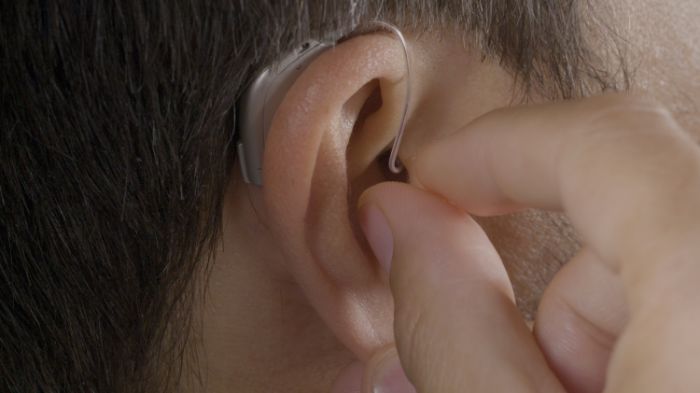
Employee checking at a woman's ear

Hearing technology is always evolving

We're here to be your guide, making the most advanced hearing aid technology simple, and perfectly suited to your needs. Our purpose is to combine superior expertise with ongoing care, so you can step into each day with confidence and joy.

Find out more at your nearest Amplifon clinic

Types of hearing aid glasses

1) Bone conduction hearing aid glasses

Bone conduction hearing aid glasses are an innovative type of wearable that uses vibrations through the skull to transmit sound directly to the inner ear, bypassing the eardrum. This technology is particularly helpful for people with conductive hearing loss, middle-ear issues, or those who cannot use conventional in-ear hearing aids.

2) Bluetooth-enabled smart glasses

Bluetooth-enabled smart glasses are wearable devices that integrate audio technology and wireless connectivity into traditional eyewear. They allow users to listen to music, take calls, or access digital assistants while maintaining the functionality of regular glasses or sunglasses. Some models also include hearing-aid features, making them ideal for people with mild hearing loss.

Wearing glasses with hearing aids

If you wear both glasses and hearing aids, comfort and proper positioning are essential to ensure the best hearing performance and a secure fit. Discover practical tips on how to wear glasses with hearing aids correctly and make your daily routine easier.
Visit our dedicated page to learn how to comfortably wear glasses with hearing aids.


Learn more
a man with glasses sitting on sofa

Hearing aid glasses: pros & cons

Pros:

  • Discreet and Stylish – These glasses look like regular eyewear, making them far less noticeable than traditional hearing aids. They are available in multiple styles, including prescription lenses, reading glasses, and sunglasses.
  • Natural Listening Experience – Using open-air speakers, they deliver amplified sound without fully blocking the ear canal, preserving environmental awareness and avoiding any “plugged-up” feeling.
  • Speech Enhancement in Noise – Thanks to beamforming technology, directional microphones focus on voices in front of the wearer while reducing background noise. This makes social interactions and conversations in moderately noisy settings much easier.
  • All-in-One Convenience – Combining vision and hearing assistance into one wearable device simplifies daily life. Users do not need to manage multiple devices, making them practical for everyday use.
  • Connectivity and Customisation – Most models connect via Bluetooth to smartphones, allowing phone calls, media streaming, and sound profile customisation through apps. Some even adapt automatically to the environment.
  • Comfortable for Mild Hearing Loss – Ideal for those with less severe hearing difficulties, as the amplification is subtle yet effective, without the intrusive feel of in-ear devices.

Cons:

  • Limited Hearing Loss Coverage – They are designed primarily for mild hearing loss. Users with severe or profound hearing loss may require traditional hearing aids for sufficient amplification.
  • Battery Life Constraints – Integrating both audio processing and Bluetooth connectivity in a small frame can result in shorter battery life compared to standard hearing aids. Frequent charging may be necessary.
  • Potential Cost – Combining advanced hearing technology with designer eyewear can make these glasses more expensive than traditional hearing aids or regular glasses alone.
  • Size and Fit Limitations – Not every prescription or face shape may be compatible, and some users may find certain frames uncomfortable for long-term wear.
  • Environmental Limitations – While they handle moderately noisy settings well, extremely loud or chaotic environments (like concerts or crowded streets) may still challenge their speech-enhancing capabilities.
  • Less Customisable Amplification than Full Hearing Aids – Though apps allow some personalisation, these glasses may not offer the same fine-tuned adjustments that high-end in-ear hearing aids provide.

Who can benefit from hearing aid glasses?

Hearing aid glasses are ideal for people with mild hearing loss who may find traditional hearing aids intrusive. They work particularly well in social situations—such as restaurants, meetings or gatherings—where background noise can make conversations harder to follow.

By combining hearing support and eyewear in one device, they offer both clearer speech understanding and the practicality of regular glasses (reading, prescription or sunglasses). Their open-ear speaker design provides discreet sound amplification while allowing users to stay aware of their surroundings.

This all-in-one solution simplifies daily life, removing the need for separate devices and offering a subtle, convenient way to improve communication in everyday settings.

Take our free online hearing test

If calls are still difficult to follow, a hearing test can provide valuable guidance. Take our online hearing test to get immediate insights into your hearing ability.

Take our free test

FAQs on hearing aid glasses

Are hearing aid glasses the same as traditional hearing aids?

No. While they help amplify sound, hearing aid glasses work differently from medical hearing aids. They usually provide general sound enhancement rather than personalised amplification programmed by an audiologist.

Can hearing aid glasses be used with prescription lenses?

Yes. Many models can be fitted with prescription lenses, reading lenses or sunglasses, allowing users to combine visual correction with hearing support.

Do hearing aid glasses work in noisy environments?

Yes, hearing aid glasses can work in noisy environments, but their effectiveness depends on the level of background noise and the severity of your hearing loss. They use directional microphones to focus on sounds in front of you, which can help improve conversations in places like cafés or social gatherings.

Are hearing aid glasses comfortable to wear all day?

Most designs aim to be lightweight and similar to regular eyewear, making them comfortable for daily use without the need to insert anything into the ears.

Are hearing aid glasses a replacement for hearing aids?

Not always. For people with moderate-to-severe hearing loss, professionally fitted hearing aids prescribed by a hearing care specialist may provide better and more personalised hearing support.

Can I get hearing aid glasses at Amplifon?

No, Amplifon clinics do not offer combined glasses and hearing aid solutions. Amplifon can help treat hearing loss that requires traditional hearing aids.
pin location Visit your nearest Amplifon clinic Find your closest clinic

Get support and advice

Request an appointment

Book now

Take an online hearing test

Take the test

Find a clinic near you

Find a clinic