

SUPER SATURDAY *Extended opening hours at select clinics Saturday 13 December* Book online today

Best Hearing Aids for Severe Hearing Loss in Australia

Your Guide to Power and Clarity

If you or a loved one are dealing with severe hearing loss, finding the right device is life-changing. You aren't just looking for volume; you are looking for clarity, connection, and the ability to confidently participate in life.

At Amplifon, we specialise in delivering the necessary power and sophisticated digital processing to manage the most challenging hearing profiles.

It takes more than a powerful device; it takes trusted expertise and a commitment to ongoing care to ensure you hear life to the fullest.

ear services Concerned about hearing loss? Book a hearing test now

Can hearing aids help with severe or profound hearing loss?

Yes, absolutely. Modern digital hearing aids, specifically high-power Behind-The-Ear (BTE) and Super Power Receiver-In-Canal (RIC) models, are highly effective at restoring audibility and improving speech understanding for both severe and profound hearing loss.

The capabilities of hearing technology have advanced dramatically. Modern power aids use sophisticated digital processing to amplify sound without distortion and, crucially, manage feedback (whistling) so the sound delivered is clear, robust, and comfortable.

What is the best hearing aid for severe hearing loss?

For severe and profound hearing loss, the best options are typically high-power Behind-The-Ear (BTE) hearing aids. These models house larger components and batteries necessary to deliver the consistent, high-output amplification required for your needs.

The physical size of the behind the ear hearing aids allows them to incorporate robust speakers and larger batteries, which are essential for long-lasting, clear power.

Why Behind-The-Ear (BTE) aids are the power champions

BTE hearing aids are suitable for severe hearing loss for several key reasons:

Why Choose BTE Hearing Aids

Max Amplification

Maximum Amplification

They are capable of reaching the highest decibel levels needed for profound hearing loss.

Connectivity

Connectivity

BTE models are often best equipped with the best antennae for streaming calls and audio directly from your smart devices.

Durability

Durability

The components are sealed in a robust casing, offering greater protection from moisture and dust, which is important for longevity.

Battery Life

Battery Life

They accommodate larger, long-life disposable batteries or powerful rechargeable cells to keep up with the demands of continuous, high-volume use.

The rise of Super Power RIC technology

While BTE models dominate the power segment, recent technological advancements mean that some larger Receiver-In-Canal (RIC) models now offer "Super Power" options. Your Amplifon audiologist can determine if a high-power RIC is sufficient for your specific level of severe hearing loss while offering a slightly more discreet profile.

custom fit Discover our range Hearing aids

What is the latest technology for severe hearing loss?

The latest innovations in technology focus less on pure volume and more on processing, clarity, and connectivity, which are critical for anyone with a hearing aid for moderate to severe hearing loss:

Advanced Feedback Suppression

New algorithms eliminate the annoying whistling (feedback) that often plagues high-power devices, allowing for clearer, more effective amplification.

Directional Microphone Arrays

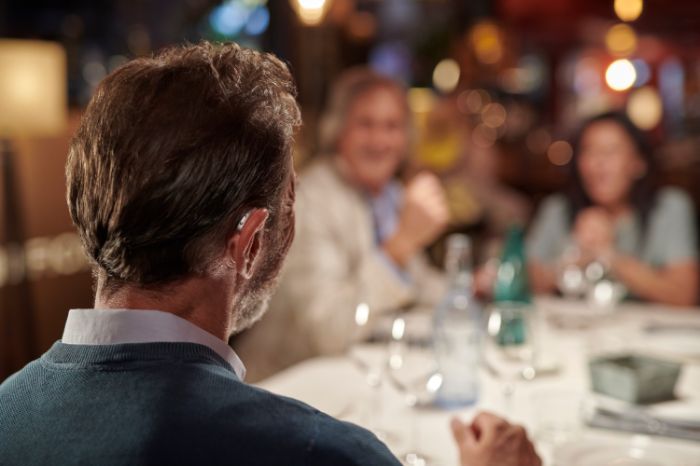
These features automatically focus the sound input on the person speaking in front of you, while simultaneously reducing noise coming from the sides and back, making conversations possible even in noisy restaurants.

Automatic Adaptation

High-end models use advanced digital processing to instantly adapt to your sound environment—moving seamlessly from a quiet home setting to a busy shopping centre without you needing to press a button.
Employee checking at a woman's ear

Hearing technology is always evolving

We're here to be your guide, making the most advanced hearing aid technology simple, suited to your personal needs. Our purpose is to combine superior expertise with onging care, so you can step into each day with confidence and joy.

How to determine severity of hearing loss?

The severity of hearing loss is determined by a professional hearing test, specifically an audiogram, which measures your hearing thresholds. Severe hearing loss is typically defined as thresholds between 71 and 90 decibels (dB HL).

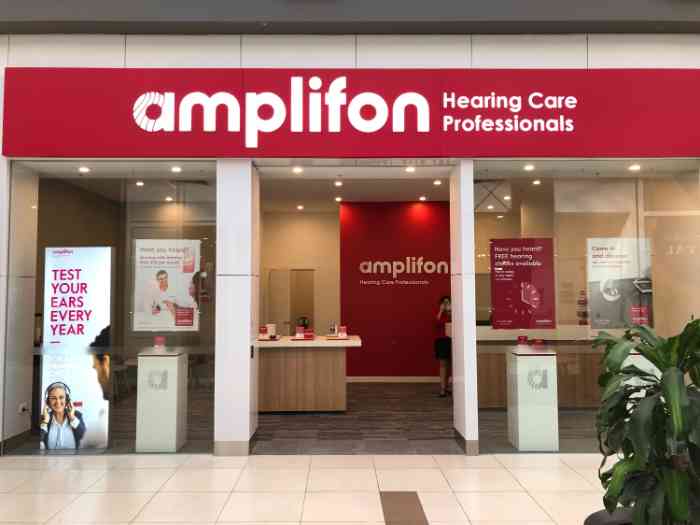
This means sounds must be quite loud before you can hear them. If you suspect you have severe hearing loss, the first and most vital step is a professional assessment. Our certified experts across more than 350 clinics in Australia, can provide this clarity.
Get a free consultation

Our experts use their experience and the latest technologies to understand your hearing issues and recommend the best solution tailored to your needs.

Book an appointment

The Amplifon Way: Expert fitting is non-negotiable

For high-power aids, fitting is the single most important factor. If the earmould or dome is not perfectly sealed, the powerful amplification will simply leak out, causing disruptive feedback.

The Amplifon Way guarantees:

Precision Earmoulds

Precision Earmoulds

Custom-made earmoulds to ensure a perfect, acoustically sealed fit.

Ear Measurements

Real-Ear Measurements

Using specialised tools to ensure the sound entering your ear is precisely what the device is programmed to deliver.

Ongoing Care

Ongoing Care

Adjustments and check-ups to ensure your device maintains optimal performance as your needs evolve.

Step Towards Clearer Hearing

Don't settle for hearing aids that promise power but fail to deliver clarity. Amplifon provides the best-in-class power technology, backed by the trusted expertise and comprehensive ongoing care that someone with severe hearing loss requires. Ready to find the device that can reconnect you to the sounds you've been missing?

Frequently Asked Questions

What percentage of hearing loss is considered severe?

Hearing loss is measured in decibels (dB), and severe hearing loss typically involves being unable to hear sounds quieter than 71 to 90 dB. At this level, you miss most speech and common environmental sounds without amplification.

What is the difference between severe and profound hearing loss?

Severe loss is 71-90 dB, meaning loud speech is difficult to hear. Profound hearing loss is defined as 91 dB or greater. For profound loss, hearing aids provide limited help, and you may rely heavily on lip-reading or other communication methods, though modern power aids can still provide essential awareness of environmental sounds.

How often should I see my audiologist with a BTE hearing aid?

We recommend regular check-ups as part of your ongoing care commitment. Because powerful hearing aids rely on perfect fitting, we suggest appointments every six months-year, or whenever you notice a decline in clarity or a change in comfort. This allows us to maintain the ideal seal and fine-tune the programming.
Visit your local clinic for more information
fallback-bg
Illustration of hearing specialist

Consult with a qualified hearing care professional

Thank you

You will be contacted shortly by our team to book your appointment

Get support and advice

Request an appointment

Book now

Take an online hearing test

Take the test

Find a clinic near you

Find a clinic