Every day, as we go about our usual routines and activities, we are exposed to environmental noise. For people without a hearing impairment, their hearing naturally adapts to the unique sound dynamics of each environment. However, for those who suffer from hearing loss, adapting to each sound environment can be more difficult. By programming your hearing aids to meet the demands of your lifestyle, you can move through different listening environments more confidently.
Although everyone's daily routine varies, you are likely to experience more listening environments than you realise in one day. In a noisy coffee shop, in a crowded supermarket or even during noisy dinnertime conversations, your hearing must adapt quickly to allow you to navigate and participate in your world. Seeing as new and noisy environments are unavoidable, programming your multi-channel hearing aids according to your lifestyle will allow you to navigate any unpredictable noise-related situations more comfortably and stay engaged.
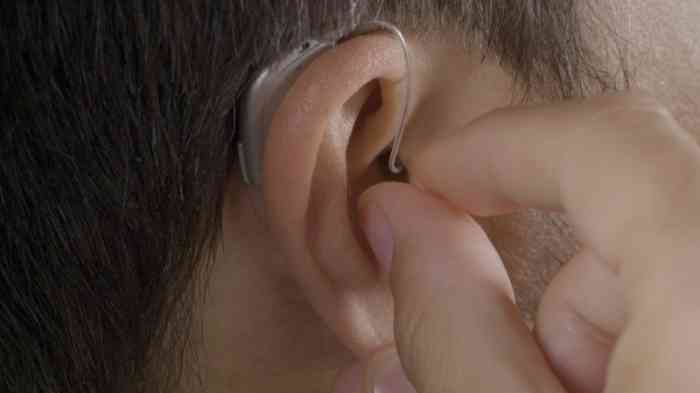
To fully grasp what hearing aid programming involves, it's essential to first understand how hearing aids work. While there are several types and styles of hearing aids, their core function is the same: to enhance sounds in a way that compensates for hearing loss.
Modern hearing aids are equipped with advanced components:
However, today’s hearing aids are much more than simple amplifiers. Unlike basic amplification devices, modern hearing aids use sophisticated digital signal processing to provide a more natural and comfortable listening experience.
This is where hearing aid programming plays a key role. Through personalised adjustments, audiologists can fine-tune your device based on your hearing profile, daily lifestyle and personal preferences. From amplification levels to background noise reduction and microphone directionality, every setting is optimised to ensure clarity and comfort—wherever you are.
Technically, some hearing aids allow limited user control through mobile apps, such as adjusting volume or switching programs. However, full programming—especially changes to frequency settings or feedback suppression—requires professional tools and expertise.
Incorrect programming may worsen your hearing experience or damage the device. For this reason, it’s highly recommended to have your hearing aids programmed and adjusted by a qualified audiologist, like those at Amplifon.
Hearing aid programs offer something similar to preset buttons. Instead of using the volume function of hearing aids to try to adapt to a new sound environment, you can switch from one listening setting to another. Each setting is designed specifically for your hearing loss and will take into account factors such as wind, car noise and more. Thanks to this type of programing, the sound emitted by the hearing aid is not only amplified, but also specialised. Depending on the type of hearing aid, there are a different number of programmable channels which can be enabled in different ways.
Hearing aids are programmed in several steps:
Hearing test results: Your audiologist will begin with a hearing assessment to determine your hearing profile.
Software interface: Your hearing aids are connected to a computer using manufacturer-specific software.
Tailored settings: The audiologist adjusts gain, compression, noise management, and other features based on your audiogram.
Real-world fine-tuning: After an initial fit, you may return for adjustments to optimise comfort in real-life situations.
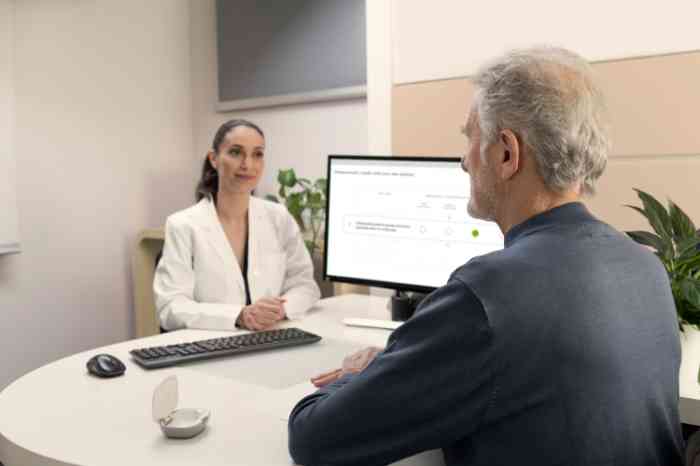
To begin the programming process, your hearing care professional will rely on several computer and algorithm-based tests to align your hearing aids with your hearing needs. The first step is to undergo a thorough evaluation by an Amplifon expert to determine your degree of hearing loss. The assessment involves a combination of listening tests to check your ability to hear a range of different sounds and to understand everyday speech. The results of the tests will become the hearing 'prescription' which the programme will be based on, customising the sounds in your world to your specific hearing needs.
These tests can be useful for the hearing care professional to have a basic understanding of your hearing, but they are by no means the only metrics available to test your hearing. Depending on the severity of your hearing loss and specific lifestyle considerations, you may undergo more specialised tests.
 Find your nearest Amplifon clinic
To find the right settings, the hearing care professional will calibrate the devices to minimise unwanted noise and enhance the desired sounds. Unwanted environmental noises, such as traffic, crowds and the background sounds of everyday life, are adjusted so that they do not overpower the sounds you want to hear, such as voices, music or notifications.
The hearing care professional can also adjust specific functions such as hearing aid volume, loudness levels, maximum output power, sound compression ratio and more. By calibrating these functions, enjoying your favourite activities will be even easier. Whether you are a music lover, a fan of the outdoors or a traveller, there are programmes that can minimise unwanted external sounds to help you enjoy these activities without interruption.
Yes. Your hearing needs may change over time, so it’s important to have your hearing aids reprogrammed regularly. Amplifon offers free hearing aid adjustments for existing customers to ensure your hearing support remains optimal.
Hearing aids are an excellent solution for managing hearing loss, but this does not mean that the adaptation is immediate. It is quite normal that you and your brain, where sound is processed, experience a learning curve as your hearing adapts to life with hearing aids. As you settle back into a world of full of sounds, the most important thing to keep in mind is patience.
Keep in mind that you can count on your Amplifon hearing care professional to help you through this process as they are there to support you and set you up for success. Even though hearing aids are programmed to fit your life, it will take some time to feel comfortable and find the perfect adjustments. However, if the problem persists or if you continue to have hearing problems, make an appointment at your local Amplifon centre to have your hearing aids readjusted.
Your journey to better hearing doesn’t end once your hearing aids are fitted and programmed. Over time, both your hearing and lifestyle may change—making regular hearing aid adjustments essential to ensure continued performance and comfort.
To get the most from your devices, schedule routine check-ups with your Amplifon hearing care professional. These visits allow for professional hearing aid programming, updates to your settings, and essential hearing aid maintenance.
If you notice changes in your hearing before your next appointment, you can book a reprogramming session at any time. At Amplifon, you benefit from free lifetime aftercare and expert support whenever you need it.
It’s important to remember that programming hearing aids is a complex process requiring specialist tools and expertise. While it may be tempting to search online for "how to program hearing aids" and attempt adjustments at home, doing so may damage your device and compromise your hearing.
Trust Amplifon’s professional services to keep your hearing aids performing at their best—today and in the future.
If you are curious about how programmable hearing aids can make a difference for you or if you would like to upgrade the your existing hearing aids, book an appointment at your local Amplifon centre to meet with a hearing care professional!