

If you’re seeking a hearing solution in Australia, knowing the financial options is just as important as choosing the right device. Many people ask: are hearing aids tax deductible?
Unfortunately, the simple answer for most Australians is no, you cannot claim the cost of hearing aids as a direct income tax deduction or a general medical expense offset in your annual tax return. However, you should always consult an accountant or tax agent to find out the answer in your specific case.
While a straight tax deduction isn't usually an option, there are several significant government and private funding programs—plus our own commitment to trusted expertise and ongoing care—that can dramatically reduce your out-of-pocket costs. At Amplifon, we focus on providing you with clear solutions, starting with a free, no-obligation hearing check and a free trial so you can find the right technology solution without any financial pressure.
 Learn more about subsidies & financing available at Amplifon
No. For most Australians, the cost of hearing aids is not tax deductible on their income tax return.
The ATO considers hearing aids an expense of a private or domestic nature, designed to overcome a personal medical condition. This means the expense doesn't qualify as a straight deduction under the general rules. For example, a deduction is generally not allowed for medical appliances like spectacles, wheelchairs, or hearing aids, as the primary purpose is assisting with personal health, not earning income.
The net Medical Expenses Tax Offset (NMETO), which once allowed people to claim a portion of their net medical expenses including hearing aids, is no longer available for the majority of claims.
The NMETO was phased out and is generally unavailable for out-of-pocket medical expenditures from 1 July 2019 onwards. There are specific, very limited exceptions related to disability aids, attendant care, or aged care that may allow a claim for the final remaining years of the offset (up to the 2018-2019 income year). If you fall into one of these specific categories, you must check the ATO website directly or consult a tax professional.
The key takeaway is to focus on other, more reliable financial solutions to manage the cost of your hearing health, which we cover below.
The HSP is the most significant way to receive assistance for your hearing care. This program provides eligible people with a voucher for free or subsidised hearing aids, ongoing care services, and maintenance.
Who is eligible for the HSP Voucher?
You are likely eligible for a fully subsidised HSP voucher if you are an Australian citizen or permanent resident aged 21 years or older and hold one of the following:
If you meet the criteria, Amplifon can process your application and help you use your voucher to access a wide range of latest technology hearing aids, often with no or minimal 'gap' payment. Conditions apply under the Hearing Services Program.
If you have private health insurance, especially with Extras cover, you are highly likely to be eligible for a rebate on the cost of your new hearing aids.
How does my private health fund help?
Tip: We strongly recommend you contact your private health insurer before your appointment and ask three specific, practical questions: "What is my total hearing aids rebate limit? How often can I claim it? Does my cover include audiology appointments or repairs?"
For eligible participants, the NDIS provides funding for a range of supports, which can include hearing aids, assistive listening devices, repairs, batteries, and audiology assessments.
Who should look into the NDIS?
We can help you navigate navigate if you are eligible for funding and support needed for your plan.
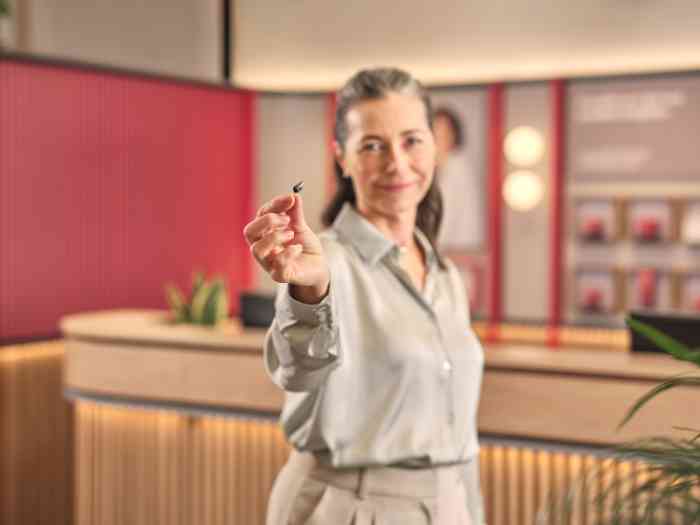
The hearing care professionals at Amplifon are happy to help you find the best hearing solution for you.
We combine global leadership with local, expert Australian service to make your journey effortless and rewarding.
Free Trial
Superior Expertise
Ongoing Support
Latest Technology
Free Trial
Superior Expertise

Ongoing Support
Latest Technology
The ATO generally does not allow a tax deduction for hearing aids, even if they are necessary for your job.
The ATO views these appliances as private expenses, required to manage a personal medical condition. Howver, if you have hearing loss related to your employment (e.g., noise exposure), you may be eligible to claim the cost of hearing aids through Workers’ Compensation in your state (such as WorkCover in Victoria).
No, the ongoing costs of batteries, repairs, and maintenance are not tax deductible for most individuals.
These are also considered private expenses. However, if you are an eligible Hearing Services Program (HSP) voucher holder, the program typically includes an annual maintenance agreement that covers free batteries and repairs, effectively eliminating these long-term expenses for you.
Yes, hearing aids and their spare parts are considered GST-free in Australia.
This means that you do not pay the 10% Goods and Services Tax on the purchase price of the device itself. This is an immediate and tangible saving that is applied at the point of purchase, rather than through a complex tax claim process.
No, a family member or carer generally cannot claim the cost of your hearing aids as a tax deduction or offset.
Since the medical expenses tax offset is no longer available, the ability to claim these costs for a dependant has also been phased out. The best way for your family to support you financially is to help you check your eligibility for government funding programs like the HSP or NDIS, or to investigate private health fund rebates.
Visit your local clinic for more information
Don't let questions about the tax system delay your journey to better hearing. At Amplifon, we focus on what matters: getting you the right, high-performing solution.
Take the first step today with a free hearing check at your nearest clinic.
 Book an appointment for a free hearing test now
Book now
Book an appointment for a free hearing test now
Book now