

Exercises for tinnitus

If you just started noticing changes in your hearing, Amplifon is here for you.

Exercises you can do to help tinnitus

Tinnitus refers to the perception of a ringing or whistling sound in the ears or inside the head, even in the absence of any external noise. Depending on the root cause, there are various exercises that can help reduce tinnitus and can be performed either at home or at a specialised clinic.

Improve tinnitus with posture exercises

There appears to be a correlation between posture and tinnitus. In fact, tinnitus can be the consequence of improper posture, whiplash or sudden movements involving the neck, also known as cervical tinnitus. In these cases, postural exercises can help treat the condition. Here a few examples of some exercises:

  • In a sitting position, with your back straight, you grasp your lower jaw with one hand and open your mouth. Without excessive force, stretch the muscles of the jaw, cheek and around the mouth. One remains with the mouth open for two to three minutes. If cramps and/or pain appear, stop.
  • Using a massaging ball, roll it at the level of the jaw muscles and over the cheek with some pressure, using spiral movements. If there are areas of obvious tension, roll the ball around, concentrating especially on these points.
  • In a sitting position and with your back straight, place your left hand behind your back. Pass your right hand behind your head and touch the ear on the opposite side, gently pull your head towards your right shoulder without turning your neck and hold the position for 20-30 seconds. Repeat 2 or 3 times before repeating the same sequence on the opposite side. 


Neck exercises for tinnitus

Many people wonder, can neck exercises help tinnitus? The answer is yes, especially when tinnitus is related to cervical dysfunction. Neck exercises for tinnitus can be particularly effective in cases involving poor posture, neck tension, whiplash, or sudden cervical movements. These factors can alter sensory input from the neck to the brain, affecting not only auditory pathways but also balance control. For this reason, cervical tinnitus is often associated with dizziness or vertigo: altered proprioceptive signals from neck muscles and joints may interfere with vestibular processing, leading to a sensation of imbalance. In such cases, neck exercises and posture correction, including targeted exercises for tinnitus and vertigo, may help reduce both tinnitus intensity and vertigo by restoring normal cervical mobility and muscle function.

The following neck exercises for tinnitus are designed to reduce muscle tension, improve cervical mobility, and support better sensory input from the neck to the brain.

Shoulder elevation and release

  • Sit or stand upright with your spine aligned.
  • Slowly lift both shoulders upward toward your ears, keeping your neck relaxed. Hold the position for a few seconds, then gently lower your shoulders back down.
  • This movement helps release accumulated tension in the neck–shoulder area, which may influence tinnitus modulation.
  • Repeat 8–10 times.

Controlled shoulder circles

  • With your arms relaxed at your sides, roll your shoulders forward in a smooth circular motion. After several repetitions, reverse the direction and roll them backward.
  • This exercise promotes circulation and loosens tight muscles that can contribute to cervical discomfort and tinnitus.
  • Perform 10 slow circles in each direction.

Gentle neck rotation

  • Sit upright and slowly turn your head to the right, keeping your chin level with the floor. Hold briefly, then return to the center and repeat on the left side.
  • Neck rotations help improve mobility and blood flow in the cervical region, which may support symptom relief in posture-related tinnitus.
  • Repeat 3–5 times per side.

Side neck stretch

  • Place one hand on your shoulder for stability.
  • Gently tilt your head toward the opposite side, bringing your ear closer to your shoulder. Apply light pressure with your hand only if comfortable.
  • Hold the stretch for 15–30 seconds, then switch sides. This movement targets lateral neck muscles involved in cervical tension and balance perception.

Chin retraction

  • Sit upright and look straight ahead.
  • Slowly draw your chin backward, as if creating a “double chin,” without tilting your head up or down. Hold briefly, then relax.
  • This exercise supports proper head alignment and reduces forward head posture, which is often associated with tinnitus and neck-related vertigo.
  • Repeat 8–10 times.
Find your nearest clinic in one click

Muscle toning & stretching for tinnitus

A good precaution for tinnitus is frequent movement and exercise, such as muscle toning and stretching. By strengthening our muscles, we are reducing the strain on the spinal column and relaxing the neck area, thereby helping to reduce stress.

Exercises for stretching jaw muscles

Tinnitus can also result from jaw related issues, such as bruxism. As a result, muscle massages, opening and closing your mouth with your tongue against your palate and exercises that stimulate lateral mobility may help resolve it.

Massage for masticatory muscles

In order to counteract mandibular tinnitus, it is best to massage the masticatory muscles to help improve circulation in the mandibular area and help decompress the condyles and relax the jaw. To perform the massage, you must gently open your mouth and move the jaw to one side as you place your hand on its underside and push gently to improve movement, hold for 3 seconds and then relax. Repeat the operation on the other side. Do this exercise 10 times, three times a day.
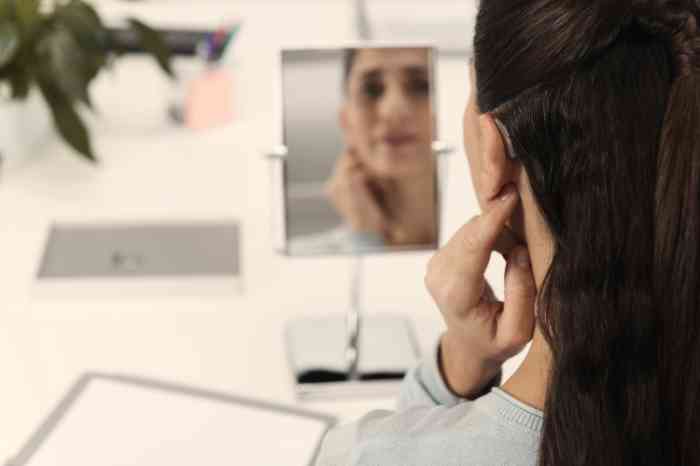
A woman looking at herself in the mirror with a focus on the BTE hearing aid.

We're here to help.

We take the time to understand your hearing health and the impact it’s having on your life and the people closest to you. With over 100+ Amplifon clinics in the UK, we can ensure that we can support you when you need us most. Whether you need a FREE hearing test, or a hearing aid adjustment, our audiologists will provide you with expert, professional advice.

Progressive muscle relaxation

Progressive muscle relaxation exercises can help you learn to ignore or control the sounds you hear. A useful tool is the PMR, or Personal Mobile Radio, an acoustic ear protector with a built-in protection against noise.

Yoga and meditation

Yoga exercises can very helpful when suffering from tinnitus. In fact, yoga and meditation can help reduce the stress, anxiety and irritability often related to this condition. However, while yoga can help minimise loud and high-pitched sound, it is still best to speak to a hearing professional to find the best treatment for your specific hearing needs. 

Deep breathing

When experiencing tinnitus, breathing in and out slowly can also help relax the muscles, not just in your ears, but throughout your body.

Guided imagery

To alleviate tinnitus, guided imagery exercises also come in handy; these exercises are a technique very similar to meditation. After reaching a state of relaxation, thanks to progressive muscle relaxation and deep breathing, you can perform guided imagery exercises that can induce you into a deep state of relaxation and comfort, thus having a positive effect on the condition.

How do I distract myself from tinnitus?

There are several ways to distract yourself from the ringining in your ears. A few of the activities suggested include such as listening to music, spending time with your pets, gardening, DIY activities, to name a few.

Listening to music

Listening to music can help divert attention from tinnitus, as can listening to white noise. However, it is important that you do not listen for too long or at too high a volume should you choose to use headphones.

Pets as therapy

Many neuroscience experts believe that the company of pets can improve a person’s overall emotional well-being, which may be also beneficial in distracting them from the ringing in their ears.

Gardening, DIY and other hobbies

Concentrating on relaxing activities and hobbies also helps reduce stress and, in turn, reduce the discomfort caused by tinnitus.
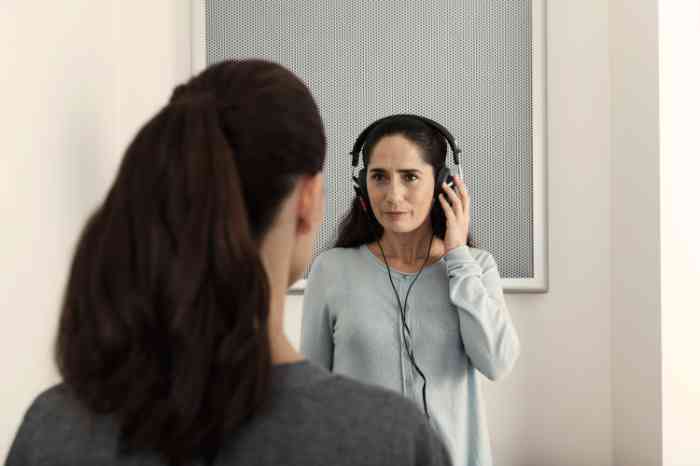
A woman with her left hand resting on the headphones during a hearing test

Try our online hearing test

Take a quick, easy test to find out how you're hearing.

See a doctor in case of chronic tinnitus

Although there are several exercises that can help reduce tinnitus symptoms, chronic tinnitus is a condition that requires a specialised treatment. To find the best treatment based on your hearing needs, it it best to consult a hearing professional or book an appointment at your nearest Amplifon centre.

Audiologist in lab coat shaking hands with a happy elderly couple in an Amplifon store.

Why choose Amplifon?

By choosing Amplifon as your hearing care provider, you’re choosing to be cared and looked after by qualified and experienced Audiologists who can help change the way you listen to the world around you.

Find your nearest clinic in one click

FAQs about exercises for tinnitus

Does tinnitus go away with exercise?

Getting regular exercise may help alleviate tinnitus symptoms by reducing stress, improving circulation, and relaxing muscle tension - especially in the neck and jaw, areas that often contribute to symptom flare-ups. Engaging in consistent physical activity, such as low-impact aerobic exercises like walking or swimming, along with gentle stretching, supports overall well-being and may help decrease the perceived loudness or intrusiveness of tinnitus.

What is the 10 second exercise for tinnitus?

The 10-second tinnitus exercise typically involves a brief neck or jaw relaxation movement aimed at easing muscle tightness that can influence tinnitus perception, particularly in cases linked to cervical issues or poor posture. Although it does not cure tinnitus, this quick exercise may provide short-term symptom relief for some individuals.

Where do you massage for tinnitus?

Massage for tinnitus is typically focused on areas where muscle tension can influence auditory perception, especially when tinnitus is related to posture or cervical dysfunction. The most common areas to massage include:

  • Neck and upper shoulders: Gently massaging the muscles along the sides and back of the neck can help reduce cervical tension that may contribute to tinnitus.
  • Base of the skull: Applying light circular pressure just below the occipital bone helps relax muscles connected to the upper cervical spine.
  • Jaw muscles (TMJ area): Tension in the jaw can modulate tinnitus in some people; gentle massage along the jawline and near the jaw joints may help.
  • Cheeks and temples: These areas are closely linked to jaw and facial muscles and can hold tension that affects tinnitus symptoms.
  • Around the ears: Light massage around the outer ear and earlobes can promote relaxation and improve local circulation.

Massage should always be gentle and pain-free. When combined with neck exercises for tinnitus, regular self-massage may help reduce muscle tension and support symptom relief, especially in posture-related or cervical tinnitus.

What type of massage is best for tinnitus?

The most effective type of massage for tinnitus is gentle, tension-reducing massage that targets the neck, jaw, and upper shoulder muscles. This approach is especially helpful when tinnitus is linked to posture, cervical tension, or jaw tightness.

What is the hand trick for tinnitus?

The hand trick for tinnitus is a simple technique often used for temporary symptom relief. It involves cupping your palms over your ears, placing your fingers on the back of your head (the occipital area), and repeatedly flicking your index fingers against your middle fingers to create a light drumming sensation. This brief stimulation may help momentarily distract or calm the auditory system and relax surrounding muscles, which can reduce tinnitus perception for some people.

Another variation of the hand trick focuses on neck involvement, particularly in cases of cervical or pulsatile tinnitus. This may include applying gentle pressure to tense neck muscles or performing short tension-release movements to relax the cervical area.

Have a look at out related contents

Learn more on how your hearing works, thanks to our experts contents. You can also have a look at our blog, with our lates news. 

Get support and advice

Book a free hearing test

Book now

Test your hearing online

Take the test

Find your nearest store

Find a store