Best hearing aid technology overview

Understanding hearing aid technology and individual needs

Choosing hearing aid technology involves more than comparing features. Hearing ability, daily routines, and listening environments all play a role in identifying the best hearing aid technology. While modern hearing aids offer a range of solutions, the most suitable option depends on how and where hearing challenges occur.


Best hearing aid technology for noisy environments

For people who spend time in busy or crowded settings, background noise can make speech understanding more difficult. Certain hearing aid technologies are designed to support listening in these conditions by helping prioritise speech over surrounding sounds. Such features can support clearer communication in places like restaurants, meetings, or social gatherings, though individual results may vary.

These technologies may include:

Directional microphones

Directional microphone technology focuses on sounds coming from specific directions, often from in front of the listener. This can support speech understanding in face-to-face conversations by reducing noise from other directions, particularly in complex listening environments.

Adaptive processing

Adaptive processing allows hearing aids to respond automatically to changes in the listening environment. As sound conditions shift—from quiet to noisy or from one speaker to multiple voices—the device can adjust its settings to maintain balanced sound quality and clarity.

Best hearing aid technology for active and social lifestyles

People with active or socially engaged lifestyles often move between different listening environments throughout the day. Hearing aid technologies designed for this context aim to maintain consistent sound quality as situations change, helping reduce the need for frequent manual adjustments. Commonly used technologies include:

Automatic environment detection

This technology allows hearing aids to recognise changes in sound environments, such as moving from a quiet space to a busy setting, and adjust processing accordingly. This can support smoother transitions across different listening situations.

Motion-aware sound processing

Some hearing aids can take physical movement into account when adjusting sound settings. This may help balance awareness of surrounding sounds with speech clarity during activities such as walking or social interaction.

Hands-free connectivity features

For people who communicate frequently while on the move, certain technologies support hands-free phone use, allowing calls to be managed without handling additional devices, depending on compatibility.
Audiologist showing app mini coat

The latest hearing aid technology

We offer the latest hearing aid technology with great features like invisibility and connectivity. Request an appointment to start your 90-day money back guarantee today.

How to support hearing aid longevity

For individuals who regularly use phones, video calls or digital media, sound clarity during streaming is an important consideration. Modern hearing aid technologies can support direct audio transmission from compatible devices, helping reduce interference from surrounding noise. Among the technologies often considered are:

Bluetooth connectivity

Bluetooth-enabled hearing aids can receive audio signals directly from smartphones, tablets, or televisions. This may help deliver clearer sound for calls and media compared to external speakers.

Direct audio streaming

Direct streaming allows sound to be transmitted to both hearing aids simultaneously, which can support balanced listening and improve speech understanding during calls or virtual meetings.

Device compatibility management

Some hearing aids are designed to work with specific operating systems or devices. Compatibility assessment is important to ensure consistent performance across different technologies.
Discover all types of hearing aids in one of our clinics

Hearing aid technology for comfort and convenience

Comfort and ease of use are important for individuals who wear hearing aids throughout the day. Technologies focused on convenience aim to simplify daily management while supporting reliable performance. Relevant technologies may include:

Rechargeable battery systems

Rechargeable hearing aids eliminate the need for frequent battery replacement and can support regular daily use when charged as recommended.

Charging accessories

Purpose-designed charging cases or stations can help protect hearing aids while charging and support routine use at home or while travelling.

User-friendly controls

Some devices include simplified controls or app-based adjustments, which may support ease of use depending on individual preferences and dexterity.
Why hearing assessments matter when choosing technology

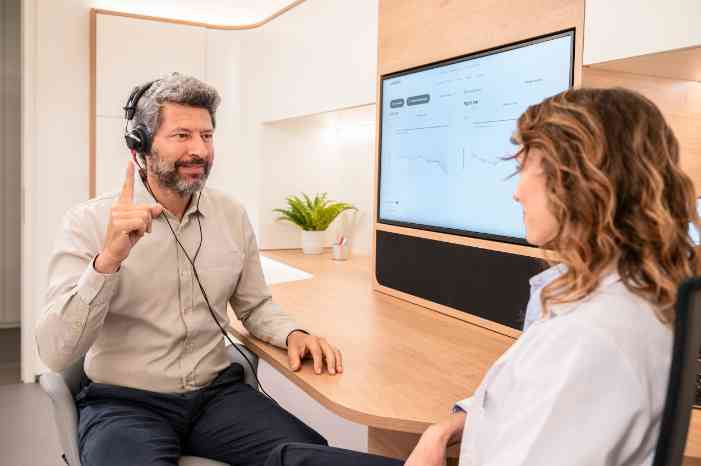
Selecting hearing aid technology involves more than comparing device features. A professional hearing assessment helps identify the type and degree of hearing loss, as well as how hearing difficulties affect everyday communication. This information is essential for determining which technologies may be appropriate and which may offer limited benefit.

Hearing assessments also take lifestyle factors into account, such as typical listening environments and communication needs at work or at home. By combining clinical findings with these considerations, Amplifon hearing care professionals can recommend technologies that align with individual needs while ensuring safe and effective use. Regular follow-up assessments may also help support ongoing performance as hearing needs change over time.

Afro man pointing at hearing aid

FAQs about the best hearing aid technology

What is the best hearing aid technology today?

There is no single technology that suits everyone. The best hearing aid technology depends on hearing loss, lifestyle, and listening environments.

How to know what technology suits my hearing loss?

A professional hearing assessment is required to determine which technologies may be appropriate for your level of hearing loss and listening needs. Booking a free appointment at an Amplifon clinic allows you to meet with a qualified hearing care professional who can assess your hearing and discuss suitable technology options based on your results.

Hearing test before choosing the aid technology?

Yes. A hearing test helps ensure that technology selection is safe, suitable, and personalised. Visiting an Amplifon clinic allows a qualified hearing care professional to assess hearing needs and discuss appropriate technology options based on individual results.

Get support and advice

Request a hearing test

Schedule an apppointment

Request now

Test your hearing online

Get your results online

Take the test

Find your nearest hearing clinic

Visit the branch locator

Find a clinic