%20rs.png)

Ear cancer is a rare condition, but it can have serious consequences if not identified early. It refers to the development of abnormal cells in any part of the ear, including the outer ear, ear canal, middle ear, and, more rarely, the inner ear. Because many symptoms overlap with common ear conditions such as infections or wax buildup, ear cancer can sometimes go unnoticed in its early stages.
Understanding how ear cancer develops, what symptoms to watch for, and when to seek medical attention is essential for early detection and effective treatment.
Ear cancer describes a group of conditions involving abnormal tissue growth, also known as ear neoplasms, which can be either benign or malignant. A cancerous ear tumor forms when cells grow uncontrollably and begin to invade surrounding tissues.
This type of cancer can affect different parts of the ear. In many cases, it develops on the outer ear due to sun exposure, but it may also appear as a tumour in the ear canal or deeper structures. In some situations, a tumour around the ear or a tumour behind the ear may originate from nearby tissues and extend into the ear region.
Because of this variability, ear cancer is not a single disease but a category that includes several tumor types with different behaviors and levels of severity.
There are several types of ear tumours:
The most common form of ear cancer is skin cancer on the ear affecting the outer ear. This happens because the ear is often exposed to ultraviolet (UV) radiation from the sun, sometimes without adequate protection.
Skin cancer on the ear typically includes basal cell carcinoma and squamous cell carcinoma, which tend to grow slowly, as well as melanoma cancer on the ear, which is less common but more aggressive. In some cases, cancer may also develop inside the ear canal, leading to what is often described as skin cancer inside the ear. This can be more difficult to detect because it is not immediately visible.
Tumors that develop deeper in the ear are much rarer but can have a greater impact on hearing and balance. These include both benign and malignant growths, often referred to collectively as auditory tumors.
One example is the acoustic neuroma, a benign tumor that affects the nerve responsible for hearing and balance. Although not cancerous, it can still cause significant symptoms due to its location. Malignant tumors in the middle or inner ear are less common but tend to be more complex to treat and may require a combination of therapies.
In some cases, what appears to be ear cancer may actually originate in nearby areas such as the skin, bones, or salivary glands. These can present as a tumour around the ear or a tumour behind the ear and may spread to adjacent structures.
Because of the proximity of the ear to the jaw, some tumors may also cause discomfort that extends beyond the ear itself, making diagnosis more challenging.

When you find it harder to react to auditory stimulus, it’s best to try our online hearing test and have a first answer on your hearing health in a couple of minutes.
Symptoms of ear cancer vary depending on the tumor’s location, but they generally fall into three main categories: visible skin changes, hearing-related issues, and neurological or structural symptoms.
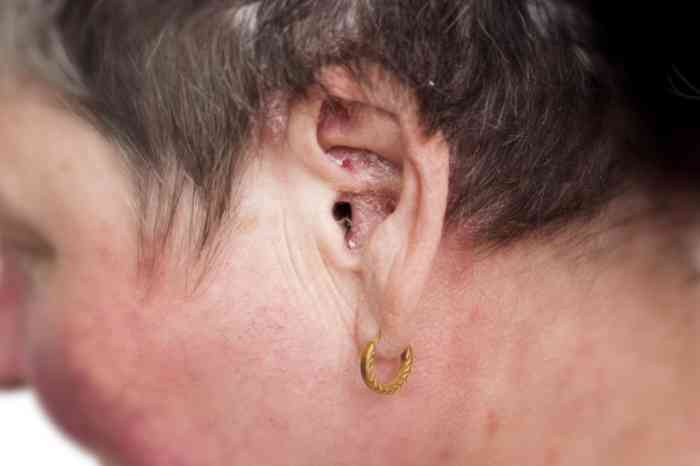
One of the most common early signs is a persistent sore, lump, or scaly area on the outer ear that does not heal. This is particularly typical of skin cancer on the ear. In more hidden locations, such as inside the ear canal, symptoms may include ongoing irritation, discharge (sometimes with blood), or a sensation of blockage.
Hearing-related symptoms are also frequent. These may include gradual hearing loss, tinnitus (ringing in the ear), or a feeling of fullness. When the tumor affects deeper structures, especially the inner ear, balance problems, dizziness, and coordination difficulties can occur.
Pain is another important signal, but it tends to appear in more advanced stages. Persistent ear pain that does not respond to standard treatments should always be evaluated carefully.
Ear and jaw pain on one side is a relatively common complaint and is usually linked to non-cancerous conditions such as temporomandibular joint (TMJ) disorders, dental problems, or infections. However, in some cases, it can be associated with tumors affecting the ear or nearby structures.
When a tumor grows in or around the ear, it may irritate nerves that connect the ear and jaw, causing pain that radiates between these areas. This is more likely if the discomfort is persistent, progressively worsening, or accompanied by other symptoms such as hearing loss, a visible lump, or difficulty swallowing.
Although this symptom alone is not a strong indicator of cancer, its presence alongside other warning signs should not be overlooked.
The causes of ear cancer are not always clearly defined, but several risk factors are known to increase the likelihood of developing the disease.
Sun exposure is the most significant factor, particularly for cancers affecting the outer ear. Individuals with fair skin or a history of skin cancer are at higher risk. Chronic inflammation, such as long-term ear infections, may also contribute to the development of abnormal cells in the ear canal.
Additional risk factors include prior radiation exposure to the head and neck area and increasing age, as most cases are diagnosed in older adults.
Diagnosis usually begins with a clinical examination of the ear. A doctor may use an otoscope to inspect the ear canal and identify any visible abnormalities.
If a suspicious lesion is found, a biopsy is required to confirm whether it is cancerous. Imaging techniques such as CT or MRI scans are often used to determine the size of the tumor and whether it has spread to surrounding tissues.
Because symptoms can be subtle, early evaluation is key to improving outcomes.
Treatment depends on the type and stage of the tumor, as well as its location. Surgery is often the primary approach and aims to remove the tumor completely.
Radiation therapy may be used as an alternative or in combination with surgery, particularly for tumors that are difficult to access. In more advanced cases, chemotherapy or targeted therapies may be recommended.
A multidisciplinary approach is often necessary to manage cancerous ear tumors effectively and preserve hearing and overall quality of life.
You should seek medical advice if you experience symptoms that persist or worsen over time. These include non-healing lesions on the ear, unexplained hearing loss, ongoing discharge, or persistent pain.
Early consultation is especially important when multiple symptoms occur together, as this may indicate a more serious underlying condition.
Although ear cancer cannot always be prevented, reducing sun exposure is one of the most effective ways to lower risk. Protecting the ears with hats or sunscreen is particularly important during prolonged outdoor activities.
Maintaining good ear health and addressing infections promptly can also help reduce long-term risks. Regular check-ups can support early detection and timely intervention.